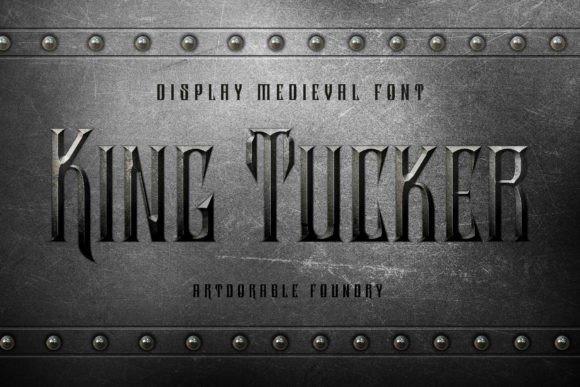
King Tucker: A Bold Font for Medieval Creativity
King Tucker is more than just a font—it's a visual statement. With its sharp, angular strokes and dramatic flair, it brings a sense of medieval grandeur to any design. Whether you're working on a fantasy album cover, a historical project, or a themed poster, King Tucker adds an air of authenticity and power. Its unique style makes it ideal for anyone looking to evoke the past in a modern context.
What sets King Tucker apart is its balance between structure and character. The letters are bold and imposing, yet they maintain a level of readability that prevents them from becoming too ornate. This makes it versatile enough for use in both large-scale displays and smaller, detailed designs. It’s a font that commands attention without sacrificing clarity.
Why King Tucker Stands Out
King Tucker draws inspiration from medieval calligraphy and heraldic symbols. Its design incorporates elements reminiscent of ancient manuscripts, making it perfect for projects that aim to transport viewers to another time. The font’s thick strokes and exaggerated serifs give it a regal quality, while its sharp angles add a sense of strength and authority.
Unlike many other display fonts that lean heavily into either elegance or chaos, King Tucker finds a middle ground. It’s not overly decorative, but it’s not plain either. This makes it adaptable across different creative fields. Designers can use it to create logos, headers, or titles that feel both timeless and modern.
One of the key strengths of King Tucker is its ability to convey a specific mood. Whether you're designing for a fantasy novel, a historical documentary, or a medieval-themed event, this font helps set the tone. It’s not just about aesthetics—it’s about creating a visual language that resonates with your audience.
Creative Applications of King Tucker
For designers working on fantasy metal album covers, King Tucker offers a powerful way to express the genre’s intensity. The font’s dramatic look complements dark, intense imagery and can be paired with bold colors to create a striking visual identity. It works especially well when used as a headline, drawing the eye and reinforcing the music’s thematic elements.
Historical projects benefit from King Tucker’s authentic feel. Whether you're creating educational materials, museum exhibits, or digital storytelling content, the font adds a layer of realism. It can be used to label timelines, highlight key events, or serve as a title for period-specific content. Its design helps bridge the gap between the past and the present.
Medieval-themed posters also gain a new dimension with King Tucker. From event invitations to promotional banners, the font enhances the overall aesthetic. It pairs well with illustrations of castles, dragons, or knights, creating a cohesive visual theme that captures the essence of the era.
Adapting King Tucker for Different Goals
Designers can tailor King Tucker to suit various audiences and platforms. For a younger demographic, pairing the font with modern color schemes and clean layouts can create a fresh, edgy look. For a more traditional audience, using it in conjunction with vintage textures and muted tones can enhance its historical appeal.
On digital platforms, King Tucker can be used in web headers, social media graphics, or app interfaces. Its strong presence ensures it stands out even in a busy design. When used in print, it maintains its impact, making it ideal for business cards, brochures, or signage.
For educators and content creators, King Tucker can be a valuable tool in making historical or literary content more engaging. It can be used in lesson plans, infographics, or presentation slides to draw attention to key points. Its visual impact helps reinforce the material being presented.
Practical Tips for Using King Tucker
To get the most out of King Tucker, start by considering the context in which it will be used. If you're working on a large banner or poster, use it at a larger size to emphasize its dramatic qualities. For smaller text, ensure there’s enough spacing to maintain legibility.
Pairing King Tucker with complementary fonts can help balance its boldness. For example, using a simpler sans-serif font for body text can provide contrast without overwhelming the design. This approach keeps the focus on the main message while still leveraging the font’s unique style.
Experiment with different color combinations to find what best suits your project. Dark, rich tones like deep reds, blacks, and golds enhance the font’s medieval feel. Brighter colors can add a modern twist, making it suitable for more contemporary designs.
Conclusion: Elevate Your Designs with King Tucker
King Tucker is a versatile and powerful font that brings a sense of history and drama to any project. Its unique style makes it ideal for a wide range of creative applications, from fantasy art to historical presentations. By understanding how to use it effectively, designers can create visuals that resonate with their audience and enhance their message.
Whether you’re a designer, marketer, educator, or hobbyist, King Tucker offers a way to add depth and character to your work. Its ability to convey emotion and authenticity makes it more than just a font—it’s a creative tool that can inspire and elevate your projects. With the right approach, it can become a key element in your design arsenal, helping you bring your vision to life with confidence and flair.